A New Blueprint for Power
A Conversation with Apex’s Eamon Perrel on Powered Land, Co-Located Energy, and Meeting the Moment
For most of the past two decades, the story of American electricity was one of flat demand and incremental change. That era is over.
Artificial intelligence is driving the largest increase in U.S. power demand in a generation—compounded by advanced manufacturing and electrification—and the projections keep rising. Goldman Sachs has revised its forecast for data center power demand three times in the past two years, most recently projecting a 220% increase by 2030 compared to 2023 levels. The traditional approach of plugging into the grid and waiting for new transmission can no longer keep pace: the average timeline from interconnection request to commercial operations has more than doubled, now exceeding four years.
These constraints are giving rise to a new model—and a new term: powered land.
Eamon Perrel, chief commercial officer at Apex, has spent more than 16 years helping shape the company’s growth and commercial strategy. Here, he explains what powered land is, why it matters, and how Apex is bringing its development expertise and industry-leading portfolio to meet this defining moment in American energy.
The conversation around power for data centers has shifted quickly—from “How do we procure clean energy?” to “Where is the power going to come from at all?” What does that shift tell us about where the industry is headed?
An enormous amount of new power generation needs to be built as quickly as possible to satisfy data center demand. Data centers are going up at such a rate that they’re consuming nearly all the excess power generation available on the grid—and in many places, driving up power prices. Access to power has become the primary constraint for new data center development, and it’s created a scarcity of what the industry now calls “powered land”: sites that are available to host a data center and that have rights to grid electricity, onsite power generation, or some combination of the two. The bottom line is that we need every megawatt we can build, firm or not, as soon as possible.
The demand for data center power is accelerating far faster than the energy infrastructure to support it can be built. What does that mismatch mean for how we build power in this country?
The current transmission system was not designed for this scale of new demand, and the process to interconnect both load and generation is lengthy. In many regions, the queue is effectively closed to new entrants for years. That’s driving the trend toward co-locating power generation and data centers—and in some cases, connecting off-grid entirely. It’s a way to deliver power faster than the traditional grid-interconnection process allows.
Over time, though, I expect power generation and large-load facilities will move back toward grid interconnection. Even facilities that start off-grid will likely find that the reliability benefits of connecting to the grid are worth it. ISOs and RTOs are already working on ways to expedite new load, generation, and transmission interconnection. As the market matures, you’ll see large load facilities increasingly siting in areas where ample power can be generated and connected to the grid.
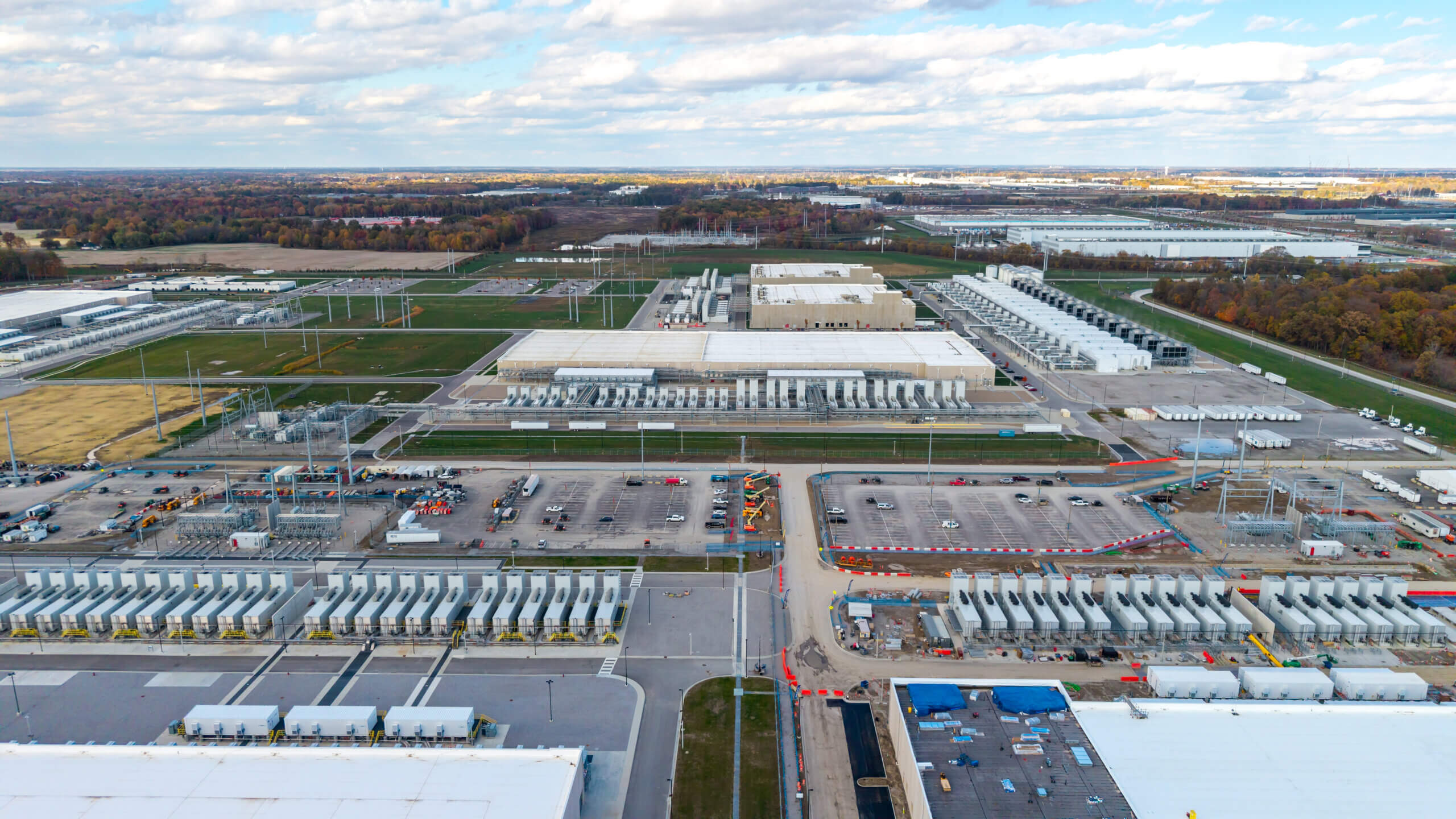
What does a powered land project actually look like? Walk us through how the pieces come together.
It starts with our existing renewable energy portfolio. Apex’s powered land sites are anchored by utility-scale wind and solar projects that are already in advanced stages of development. We then layer in additional resources—storage, supplementary grid interconnection, and in some cases firming generation—to create a system that can deliver reliable power around the clock. That grid access is a key part of the design: it enhances reliability for the data center and makes the project significantly easier to finance.
To give a sense of scale: our Glass Mountain Energy complex in West Texas represents a 2.4 GW near-term generation opportunity backed by over 380,000 acres of secured leases in a transmission-advantaged location with planned 765 kV upgrades running through the site. The combined wind and solar resource there is among the strongest in the country. And Glass Mountain is just the anchor of a broader Texas portfolio with a longer-term development opportunity of 14 GW.
We’ve already demonstrated elements of this model in ERCOT through our work with Plug Power, which included one of the largest planned private-use networks with renewable energy at 345 MW of wind.
How can renewables deliver the kind of firm, reliable power that data centers require?
Data centers want to run continuously—reliable power, at all hours. That requirement has led many hyperscalers, even those with ambitious clean energy commitments, to default to natural gas for new builds and offset emissions through virtual PPAs with wind and solar projects elsewhere.
But that’s not the only path. A wind-anchored system—wind and solar combined, sized to carry a significant share of the load—can deliver firm power when paired with storage and a limited amount of gas generation. This is the cleanest economically viable solution available today, and with large-scale thermal experiencing long lead times, it can be deployed faster than building new conventional generation from scratch. As emerging technologies reach the market, the solution will get even cleaner.
The choice isn’t between reliability and clean energy. It’s about designing the right system—and that’s where deep experience across wind, solar, and storage really matters. There has been a lot of focus recently on firm capacity. As deliveries of gas turbines continue to push beyond 2030, and as electricity demand increases ever more rapidly, we are facing a deficit of electricity, not just capacity. The fastest way to satisfy this deficit is to build the gigawatts of wind, solar, and storage projects that are already developed and ready to go.
The choice isn’t between reliability and clean energy. It’s about designing the right system.
There’s concern that data center growth will raise electricity costs for everyday consumers. How does co-location or powered land address that?
Power from co-located generation means data centers aren’t competing with other customers for grid supply. These projects add new generation rather than drawing from what’s already there and creating a demand-supply imbalance.
Co-location also reduces pressure on the transmission system. When generation and load are sited together, you avoid many of the costly grid upgrades that come with connecting a new data center to distant generation sources. Over time, regulators will develop mechanisms to allocate grid upgrade costs more directly to the large load customers driving that demand—but in the near term, co-location is a practical way to add capacity without shifting costs to everyday ratepayers.
What makes Apex well suited to deliver these kinds of projects?
We have very large projects, a combination of technologies, and a national portfolio that lets us match customers with the right site and resource mix across markets. Wind is particularly important for powered land solutions, given its high net capacity factor, and it’s a core strength of ours.
We’re also flexible in how we structure deals. We can do traditional PPAs, full-requirements retail service, project sales to corporate customers, or development transfers to a customer’s utility. Every customer’s situation is different, and powered land is not a one-size-fits-all product.
How do you see this market evolving over the next several years, and where does Apex go from here?
I expect the market will evolve to better appreciate wind and solar as components of an optimal power solution—as many utilities already have—and you’ll see a shift in focus from onsite gas to areas with access to plentiful and affordable renewables. Some of the regions where we’re developing large-scale projects may become Tier II and even Tier I data center hubs.
In the near term, additional natural gas generation will be part of the picture to support reliability, and we’re clear-eyed about that. But this surge in demand has also sparked real investment in next-generation technologies—long-duration storage, advanced nuclear, enhanced geothermal—that could be transformative tools in the pursuit of carbon-free power.
We’ll continue to develop strong renewable energy projects and stay focused on accelerating the shift to clean energy—providing the solutions our customers need today, and deploying new technologies as they reach commercialization.
Authors